- Jared Mazurek
- From Whitetales
- Hits: 225
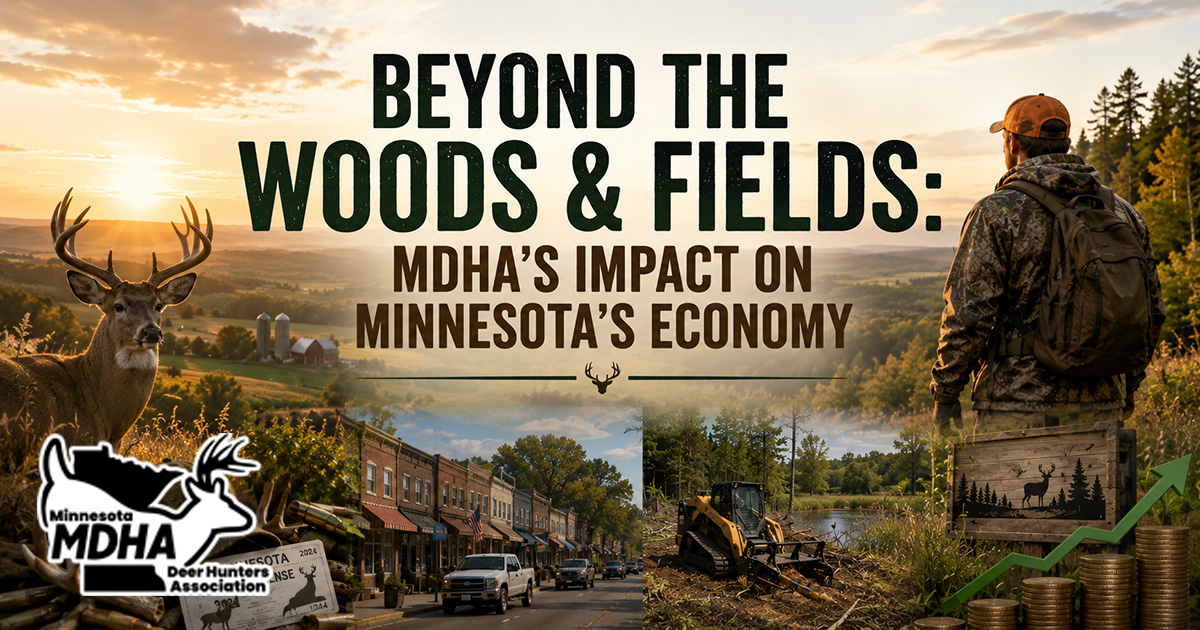
Beyond the Woods & Fields: MDHA’s Impact on Minnesota’s Economy
- Jared Mazurek
- From Whitetales
- Hits: 225
For more than four decades, the Minnesota Deer Hunters Association has played a major role in shaping Minnesota’s outdoor heritage. While MDHA is best known for its advocacy on behalf of deer hunters and wildlife habitat, our organization’s influence extends far beyond the woods each fall. Through conservation projects, habitat restoration, outdoor education, fundraising events, and support for hunting participation, MDHA contributes significantly to Minnesota’s economy and quality of life.
Hunting has long been an economic engine in Minnesota. According to Hunting Works for Minnesota, more than 477,000 people hunt in the state each year, generating approximately $733 million in annual spending and supporting more than 12,400 jobs statewide. The total ripple effect of hunting activity exceeds $1.3 billion annually. Deer hunting represents the largest share of that activity, with more than 85% of Minnesota hunters participating in deer season.
MDHA plays a critical role in sustaining that economic activity by helping preserve the hunting traditions, habitat quality, and public access opportunities that keep hunters engaged year after year. Without organizations dedicated to conservation and hunter recruitment, Minnesota would risk declining participation rates, reduced license sales, and diminished funding for wildlife management.
One of MDHA’s most visible economic contributions comes through habitat restoration and conservation projects. Our organization invests heavily in habitat improvement efforts on public and private lands throughout Minnesota. These projects include forest management, prairie restoration, wetland enhancement, invasive species removal, thermal cover improvements, wildlife food plot development, and more.
These projects generate direct economic benefits by creating demand for contractors, forestry crews, equipment operators, seed suppliers, conservation professionals, and local vendors. Habitat work often takes place in rural communities where outdoor recreation dollars are especially important. The spending associated with conservation projects helps support local economies while improving the long-term sustainability of Minnesota’s wildlife resources.
MDHA’s “Hides for Habitat” program is another example of how conservation and economics intersect. Since 1985, the program has raised more than $6.5 million for wildlife habitat projects by recycling donated deer hides. Hunters donate hides during deer season, chapters coordinate collection efforts, and proceeds are reinvested into local habitat improvements. The program supports small businesses, fur buyers, transportation providers, and local conservation initiatives while keeping waste out of landfills.
Importantly, the economic impact of MDHA extends beyond direct spending. Deer hunting drives substantial tourism and travel throughout greater Minnesota each fall. Hunters spend money on fuel, lodging, restaurants, sporting goods, ammunition, archery equipment, processing services, and licenses. Small towns across northern and southern Minnesota experience seasonal economic boosts during deer season as hunters travel to camps and public hunting lands.
Organizations like MDHA help maintain the cultural traditions and advocacy infrastructure that keep those hunters active. Through legislative engagement and public outreach, MDHA works to protect hunting access, science-based deer management, and conservation funding. Those efforts help preserve the economic ecosystem tied to Minnesota’s hunting heritage.
Conservation funding itself is another major economic factor connected to MDHA’s mission. Minnesota wildlife management is funded heavily through hunting license sales and federal Pittman-Robertson excise taxes on firearms, ammunition, and archery equipment. Those dollars support wildlife management areas, habitat acquisition, research, conservation officers, public shooting ranges, and outdoor education programs across the state.
By encouraging hunter participation and recruitment, MDHA helps sustain the user-funded conservation model that finances much of Minnesota’s wildlife management infrastructure. National research consistently shows that hunters and anglers remain among the largest direct contributors to conservation funding in the United States.
MDHA also contributes economically through its network of chapters and fundraising events. Local chapter banquets, raffles, conservation banquets, and outdoor events generate revenue for community projects while supporting local venues, caterers, printers, retailers, and sponsors. These events often serve as important annual economic drivers in smaller communities.
Our organization’s educational programs create long-term value as well. MDHA’s Forkhorn Camps and youth education initiatives introduce young Minnesotans to hunting, conservation ethics, firearm safety, and outdoor recreation. These programs help develop the next generation of conservationists while supporting future participation in hunting and outdoor recreation industries.
Beyond economics, MDHA’s work delivers broader societal benefits that are harder to quantify but equally important. Habitat improvements benefit countless wildlife species beyond deer, including pollinators, upland birds, waterfowl, and non-game wildlife. Active deer management also helps reduce agricultural damage, deer-vehicle collisions, and disease concerns such as Chronic Wasting Disease.
Minnesota’s outdoor economy depends heavily on healthy wildlife populations, accessible public lands, and strong conservation partnerships. MDHA has become a premier organization helping connect hunters, landowners, conservationists, and policymakers around those shared goals.
As Minnesota continues to grow and develop, pressure on wildlife habitat and outdoor traditions will only increase. Organizations like the Minnesota Deer Hunters Association will remain essential not only to preserving hunting heritage, but also to supporting the economic activity, conservation funding, and rural communities tied to Minnesota’s outdoor way of life.