- David Lien
- From Whitetales
- Hits: 1642
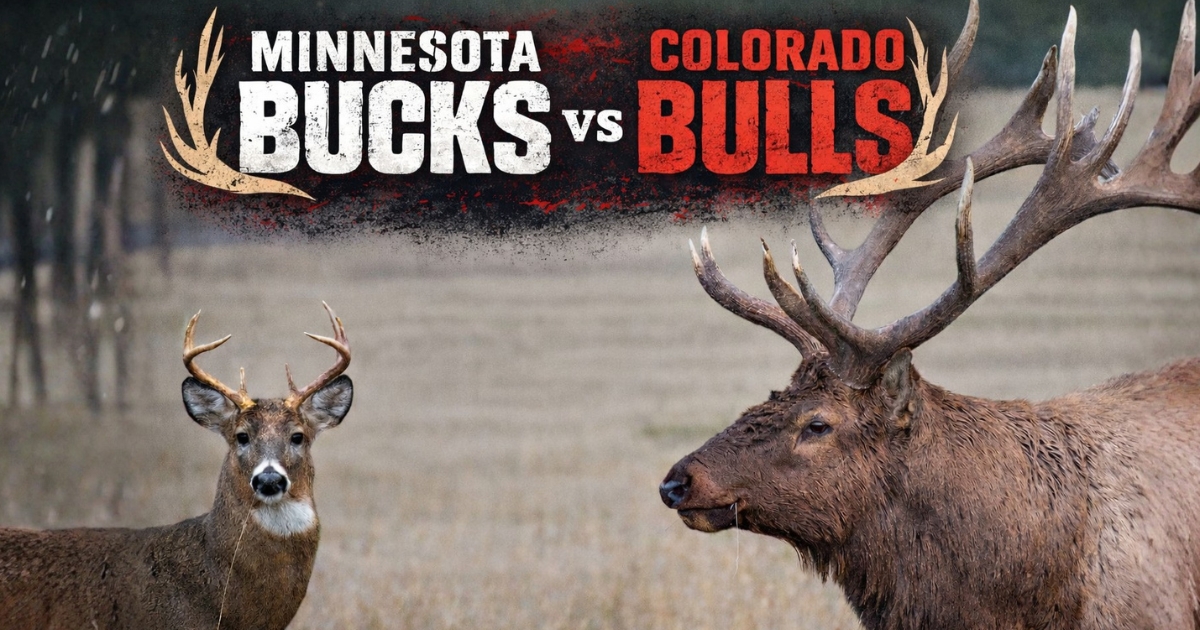
Minnesota Whitetails vs. Colorado Wapiti: Hunting Similarities & Differences
- David Lien
- From Whitetales
- Hits: 1642
Like many of us raised in Minnesota, I started hunting as a pre-teen (at the age of eleven) and have been at it ever since. Some highlights include my first ruffed grouse (1978) and first deer (1981). Years later, my first contribution to Whitetales, a story (“Whitetail Deer Evolution”) in the Spring 1995 issue. During the subsequent thirty-plus years I’ve been privileged to write/contribute an additional 42 Whitetales stories.
And although I grew up in Grand Rapids—home of the Minnesota Deer Hunters Association (MDHA)—and return to hunt grouse and deer every fall, I’ve been living in Colorado since 1998 and hunting elk in southwest Colorado’s high and wild San Juan Mountains for going on twenty years now. Two more hunting highlights (both during 2011): my first mountain Merriam’s turkey (on April 27) and, later that year, first Rocky Mountain elk (October 18).
“Elk are special for most hunters,” American Hunter Field Editor Bryce M. Towsley explained. “They are the holy grail of Western hunting, particularly for those of us who don’t live in their habitat.” Colorado elk hunting is physically daunting compared to Minnesota deer hunting, but I shoot a Colorado bull about as often as bagging a Minnesota buck, every third year or so. However, in the last four hunting seasons I’ve managed to tag two bulls and two bucks.
Whitetails & Wapiti
Whitetail deer hunting reigns supreme in Minnesota, but elk (or wapiti) were once common in L'Étoile du Nord (the “North Star State”). As recently as the middle of the 1800s elk ranged across much of Minnesota. According to the Minnesota DNR’s 2016 elk management plan, people saw “herds of a thousand or more” elk in southern Minnesota as late as 1841. The big animals lived in about three-quarters of the state at the time, while the northeastern corner of Minnesota was home to woodland caribou.
Times have changed. Today elk hunting in Minnesota is a once in a lifetime opportunity for a very lucky few and during recent years the numbers of available licenses have dwindled. In 2020, there were 44 up for grabs, but only four in 2025. However, elk may be reintroduced to northeastern Minnesota, not far from Duluth, within a few years.
The Fond du Lac Band of Lake Superior Chippewa proposes to expand Minnesota’s elk numbers and range by moving 100-150 elk from existing herds in northwest Minnesota to the area of the Fond du Lac State Forest and the Fond du Lac Reservation in Carlton and southern St. Louis counties. Elk would be relocated over an extended period.
Hence, for the immediate future Minnesotans looking to hunt elk at least once during their lifetimes should head west. For starters, consider Googling these Colorado Outdoors posts: “Five Tips For Beginning Elk Hunters” and “Colorado Elk Hunting: Showing Up (Physically Fit) Is Half The Battle (& The Easy Half).”
Over the years I’ve written/contributed 35 Colorado Outdoors stories on elk and turkey hunting along with multiple other hunting- and conservation-related topics that are all available online. Like Outdoor News contributor Ryan Rothstein said: “My biggest goal is to translate my own learning experiences into something that other hunters can use to improve their success.”
Persistence Pays
This year (2025) was my nineteenth season (2007-2025) of Colorado elk hunting. During the previous eighteen years I put six bulls in the freezer at a rate of about one bull every three years or 33 percent. During 2024 the Colorado elk harvest for all manners of take was 20 percent. For second rifle season (when I hunt) the antlered harvest was 17 percent.
“If I could pick one secret for success on public land it would be persistence,” Bryce Towsley wrote in American Hunter. “The thing about public land is that there are a lot of hunters other than just you. You can cuss all you want, but they have as much right to be there as you do. The smart hunter uses that to his advantage. You can do a lot of scouting with OnX or Garmin, but nothing substitutes for footprints.”
Outdoor News Managing Editor Rob Drieslein asked Minnesota native (now living in Montana) Randy Newberg, an accomplished elk hunter, for his thoughts on transitioning from whitetails to wapiti: “Any advice for an Eastern whitetailer who wants to hunt elk?” Newberg replied: “First, get your mind right. It’s going to be way harder than whitetail hunting. Physically, you may want to give up at times. Getting familiar with the vastness of the West and places elk live at first is intimidating, almost overwhelming.”
As Bryce and Randy allude to, the best tool in any elk hunter’s arsenal is simple persistence combined with physical fitness. You have to keep at it day after day. You also need to be flexible enough to change things up when Plan A isn’t working. Randy hunted his first six years without firing a shot. Similarly, I went five years before putting meat in the freezer.
However, while serving in the military I learned to “fail forward.” Useful failures are merely steppingstones to later success. Said another way, the very problems you must overcome in life (and elk hunting) also support and make you strong in overcoming them. A rough translation of the Latin phrase “amat victoria curam” is “victory loves the possibility of failure.” So does elk hunting.
Half The Battle
“To kill any elk under any fair chase terms is a major accomplishment,” Josh Dahlke wrote in Petersen’s Hunting. “The first step is getting on the wapiti’s turf—and that’s half the battle.” Much of the western “vastness” Randy mentioned and Josh alludes to boils down to elevation. The highest point in Minnesota is Eagle Mountain in the Boundary Waters Canoe Area Wilderness (BWCAW), at 2,301 feet. Eagle Mountain is only 15 miles from Minnesota’s lowest elevation, Lake Superior, at 607 feet.
Colorado is on average the nation’s highest state: 6,800 feet. Colorado also has 637 peaks higher than 13,000 feet and its highest peak, Mount Elbert, reaches a lofty 14,431 feet. The state’s lowest point is at 3,315 feet on the Arikaree River where it flows into the northwestern corner of Kansas. As Backcountry Journal contributor Ty Stubblefield wrote (in “Hunt Training For Real Humans”): “At 10,000- to 12,000-feet elevation in the Colorado … backcountry, every breath feels like it’s your last.”
“The availability of oxygen will affect your physical and mental ability to hunt as hard as you might wish,” David “Elkheart” Petersen wrote in Traditional Bowhunter magazine (“Planning a Do-It-Yourself Western Hunt,” Dec. 2012). “Higher altitudes also greatly increase the potential for weather extremes … failure to prepare for it can spoil your picnic and even prove life-threatening.”
A hunter from coastal Washington state flew from sea level to mile-high Denver, then drove to Trapper’s Lake on the Western Slope and backpacked to an altitude of 12,500 feet in the Flattops Wilderness Area—all within the span of 18 hours. He spent all five days on his back suffering from altitude sickness and, as a result, potentially risked his life in the process. Don’t be that guy.
Mobility & Migration
Elk are brute-big, scary strong, and highly mobile. They will move miles on a whim or a whiff (of you). “Good whitetail hunters are diligent about wind as every elk hunter should be. Remain a fanatic about the wind,” Randy Newberg said. “Also, elk move a lot. This is not a 100-acre-woods animal that you can pattern. An elk may not repeat his pattern for three weeks, and then it may be five miles away. Don’t get stuck in a rut with elk; be willing to travel and move, travel and move.”
“Unlike white-tailed deer, elk seldom follow the same paths, visit the same fields and openings, or browse the same woodland edges day after day,” Outdoor News contributor Patrick Durkin wrote. “Elk move all the time and can be anywhere,” David Petersen added. “Sometimes, for their own reasons, an entire mountainside’s worth of elk will clear out and not return … Riches to rags.”
Most elk are migratory. While some just shift around an area to take advantage of different habitat nutrition as the seasons change, most mountain elk travel from the abundance of nourishment in the high country to lower elevations with less snow. Bet on the fact that any elk you stumble across will undoubtedly have a brief pattern for your exploitation.
Whitetails & Whitetales
“Nothing created by man has come close to captivating me like a big whitetail buck. Such is the power of these deer,” Stu Osthoff wrote in the Boundary Waters Journal. Ultimately, the rationale for protecting and perpetuating Minnesota’s public lands and deer hunting legacy can be boiled down to Stu’s words of wisdom. “Deer hunting is not really about venison in the freezer or antlers on the wall,” he said. “It is about a timeless and priceless love of the wild.”
During November 2015 I had the privilege of hunting whitetails with one of the ten MDHA founders, Ed Schmidt, who was also my fourth grade (1977-78) teacher. I wrote about hunting at his family deer camp in the Spring 2022 Whitetales (“Hunting With A Man Made of Whitetales”), my 43rd contribution to this excellent publication. I’m also extremely humbled to have made two Whitetales covers: Summer 2006 and Fall 2015.
Thank you, Ed, and MDHA, for your ongoing work on behalf of “hunting, habitat, education, and legislation.” Wildlands and wildlife need many more like you. And as most elk hunters know firsthand, keeping healthy elk herds on public lands requires ample secure habitat—big wild country without motorized (roads) or mechanized (trails) disturbance.
“The three-part formula for assuring a rich elk hunting future … could hardly be simpler,” David “Elkheart” Petersen emphasizes. “Those three essential elements are: habitat, habitat, and habitat.” To summarize: elk habitat is dependent upon big wild country, which is dependent on public lands, which requires keeping public lands in public hands. “Public lands are not a left or right issue, they’re an American issue,” I observed in a June 2025 Backcountry Hunters & Anglers (BHA) blog (“Privatization of public lands”).
My parting thoughts: Rocky Mountain elk habits and habitat combine to confound most elk hunters. For expert advice to help improve your odds, read or watch anything on the subject by David “Elkheart” Petersen (founder of the first BHA state chapter, in Colorado) or Randy Newberg (host of “Fresh Tracks,” “On Your Own Adventures,” and “Hunt Talk Radio”). For a day-by-day video summary of my 2025 elk hunt visit: https://www.youtube.com/@DavidLien-xh2ip/shorts.